Emergency Roof Repair in Florence: Know When to Call Now
A family-owned, locally operated roofing company with family roots in the trade dating to 1988.
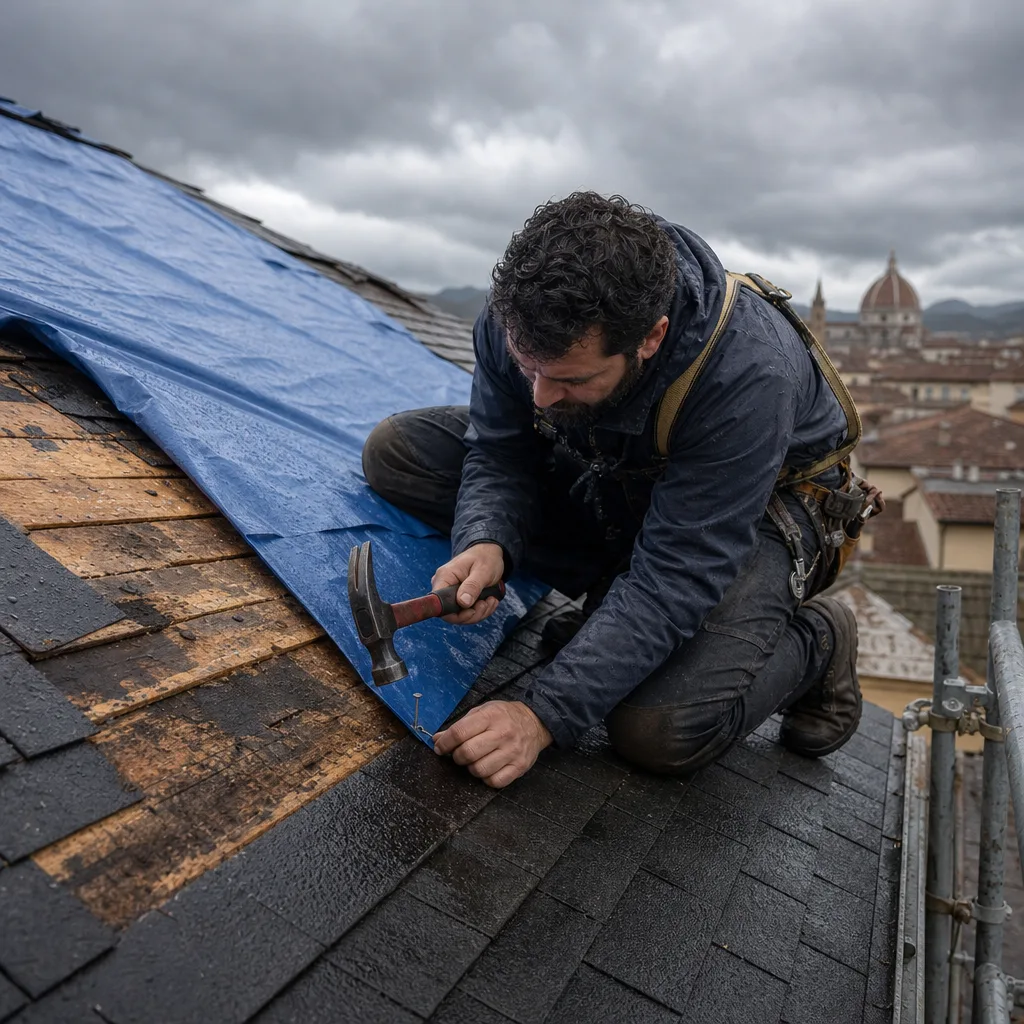
Signs Your Roof Damage Is a True Emergency
Not every storm mark on your roof means you need someone up there tonight. Here’s how to tell the difference. Is the damage letting water or weather into your home right now, or is it about to?
If you see any of these, treat it as an emergency:
- Water coming through the ceiling, around a light fixture, or down an inside wall while it’s raining.
- A tree or big limb on the roof. Florence has plenty of tall pines, and when one comes down in a storm it can punch straight through the decking.
- An open hole where you can see daylight, decking, or attic space from the outside.
- A sagging spot in the roofline or a ceiling that’s bulging or dipping. That usually means water is pooling or something underneath has given way.
- A large section of shingles or metal panels torn off, leaving bare wood or underlayment open to the weather.
- Flashing ripped loose around a chimney, vent, or wall, with water already finding its way in.
What these have in common is that the damage gets worse by the hour. Wet insulation holds water against the drywall. Soaked decking starts to soften. A small drip can turn into a stained ceiling, then a fallen one. Getting the roof covered fast stops that chain before it adds a second repair bill on the inside.
Timing matters here too. Summer afternoon thunderstorms in the Pee Dee can roll through one after another, and tropical systems can sit over the area for days. A hole that’s dry at noon may not stay dry through the evening. If more rain is on the way and your roof is open, don’t wait to see what happens.
Now the straight answer on what usually isn’t an emergency:
- A handful of shingles blown off, with no leaks inside and no bare wood showing.
- Granules washing out of the gutters.
- An old, dry ceiling stain that hasn’t grown.
- Small dents in metal roofing or gutters after hail, with no sign of water getting in.
Those still need attention, and you shouldn’t ignore them for months. But they don’t need a crew on your roof in the dark or in the rain. A regular roof repair or roof inspection visit during the week will handle them, and you’ll avoid paying for urgency you didn’t need.
Look for these signs from the ground or from inside your house. Don’t climb onto a wet or storm-damaged roof to check. If you can’t tell whether the damage is an emergency, describe what you’re seeing when you call. Tell us where the water is, how fast it’s coming in, and whether anything has hit the roof. That’s usually enough for a straight answer on whether it needs help today or can wait.
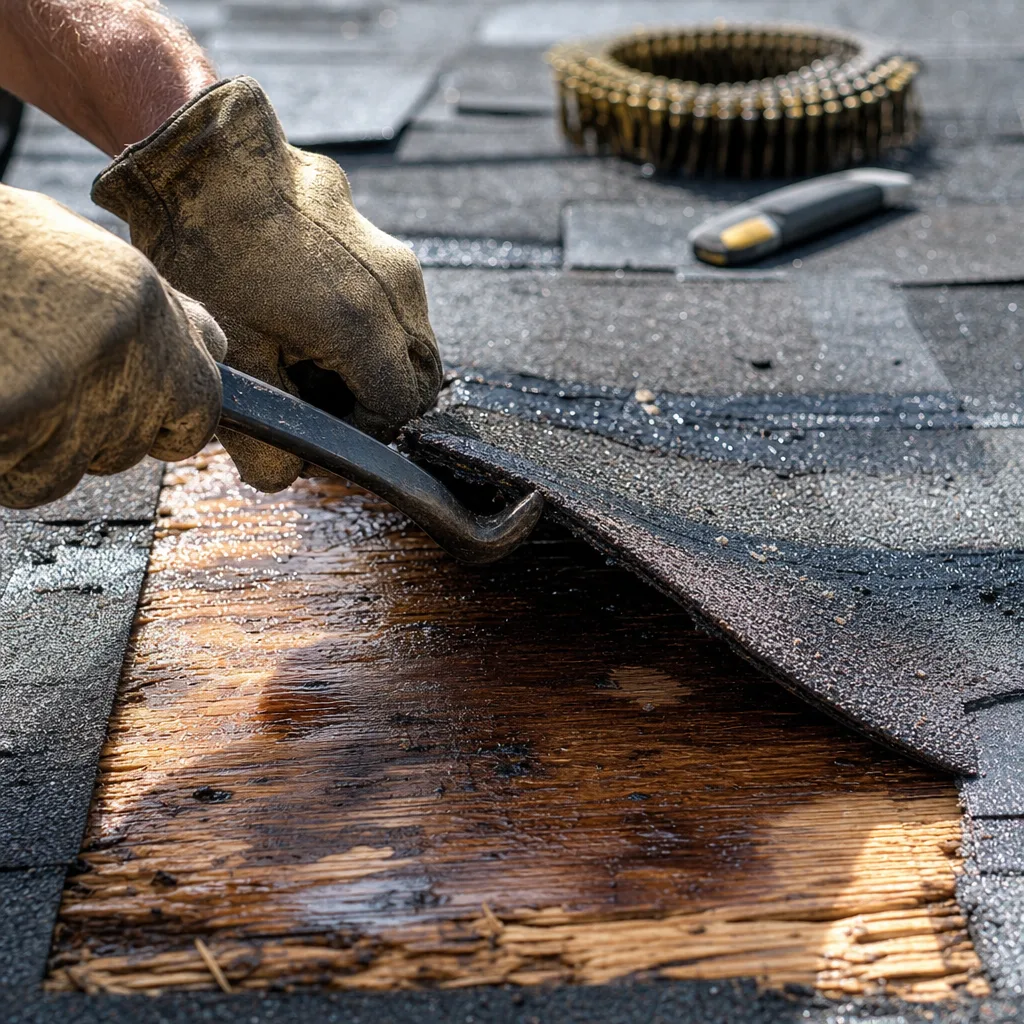
When Roof Damage Can Wait for Standard Scheduling
If your damage fits the “can wait” side, a regular visit in the next several days is the right call. Waiting in this case is the smart move, not a lazy one. A roof is easier to fix when it’s dry, in daylight, with time to do the whole job instead of just covering it up.
Here’s the thing most people don’t hear. An emergency call usually gets you a temporary fix. That means a tarp, some sealant, or boards over a hole, just enough to stop the water. Then someone has to come back later and do the real repair. That’s two trips, two rounds of labor, and often a higher rate for the first one if it’s after hours or on a weekend. If your roof isn’t letting water in, you can skip the first trip and pay for the repair once.
So what do you do in the meantime? Keep it simple.
- Take photos from the ground and from inside. Get the missing shingles, any dents, and your ceilings, with the date showing. If you file an insurance claim later, those pictures help.
- Check your attic with a flashlight after the next rain if you can get up there safely. Look for damp wood, wet insulation, or drips. Dry is good news.
- Watch the ceilings under the damaged area. A stain that’s growing or looks darker than it did yesterday means water is getting through.
- Clear what you can from the ground. Pine needles and leaves piled in gutters and valleys hold water against the roof, so a damaged spot gets wet faster.
- Write down what you see, where it is on the roof, and when you first noticed it. That makes the call quicker and the estimate more accurate.
How long can it wait? Days, not months. Missing shingles leave the underlayment doing a job it wasn’t built to do alone. It can hold for a while, but sun and rain wear it down. In Florence, the summer heat and humidity don’t give an exposed spot much rest. A small weak point left all season can turn into soft decking by fall.
Know when “can wait” turns into “can’t.” Treat it as urgent if a heavy storm is in the forecast and bare wood is showing, if a new stain shows up, if you hear dripping in the attic, or if more shingles come off in the next wind. Any of those moves you back to the emergency signs above, and you should call that day.
When you book the regular visit, ask a few straight questions. Will they look at the whole roof or just the spot you pointed to? Is the price for a repair, or are they already talking about a full replacement? If it’s replacement, ask them to show you why. Some storm damage really does mean it’s time for a new roof. A lot of it doesn’t. A good contractor will tell you which one you’ve got and show you the proof, whether that’s photos, damaged pieces, or the condition of the decking.
Not every roof problem is an emergency, and nobody should sell it to you like one.
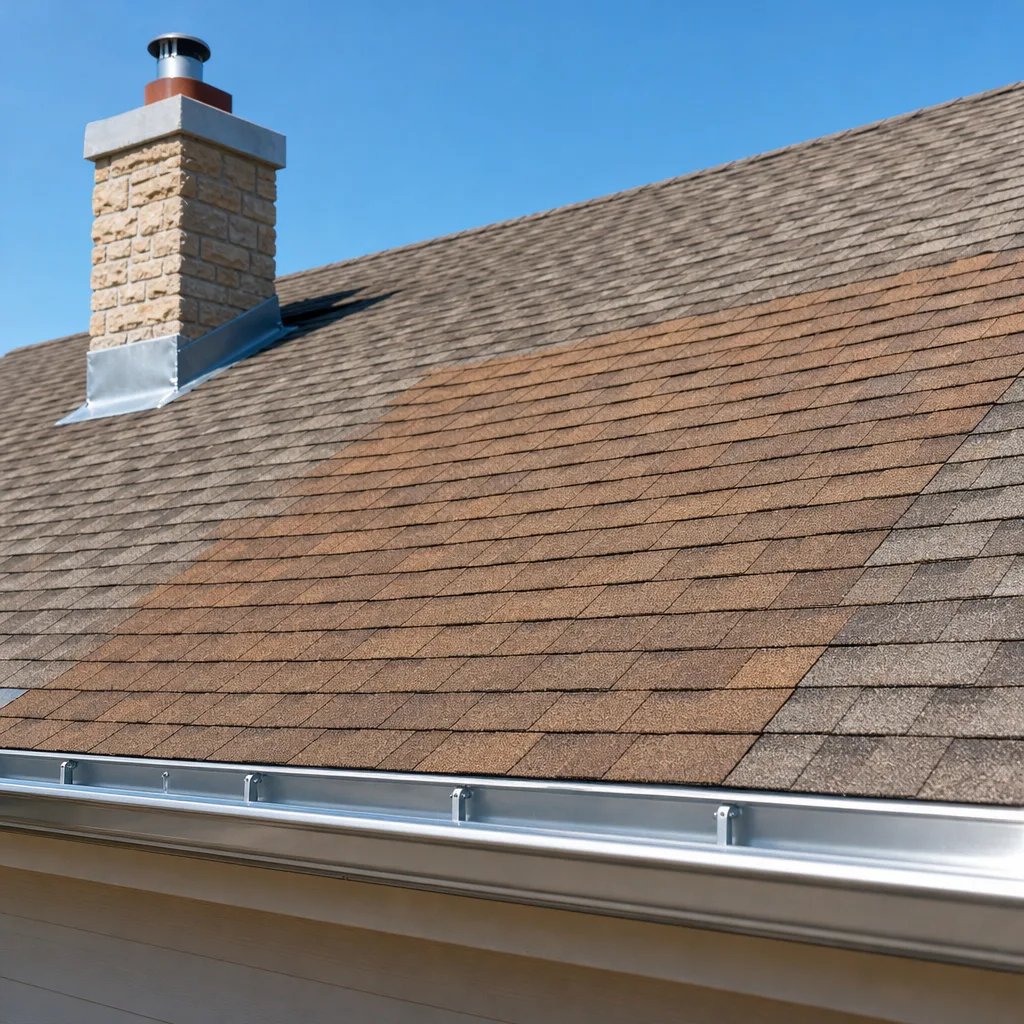
What Happens When You Call for Emergency Repair
When you call us, Haley picks up. She runs our phones and our schedule, so the person you talk to is the person who gets a crew moving. You won’t get bounced around.
Have the basics ready, like the ones covered above: where the water is, how fast it’s coming, and whether anything hit the roof. Add your address and whether there’s a tree or limb still on the house. That helps us know what kind of help to send.
Most emergency roof work follows the same order, no matter who you call:
- Size it up from the ground first. The crew looks at the roofline, the damage, and the weather before anyone climbs. If lightning is close or the wind is still howling, going up can wait a little. A hurt roofer doesn’t help your house.
- Stop the water. That’s the temporary fix we covered earlier. A tarp gets stretched past the damage, fastened down, and run up over the ridge so rain sheds off instead of under it. Boards go over open holes first if the decking is broken.
- Check inside. Somebody looks at the attic and ceilings under the damage to see how far the water got.
- Write it down. You should get photos and notes on what was damaged and what was done. Your insurance company will want that.
One thing a roofer can’t fix is a tree still sitting on your house. If a big pine came down on the roof, a tree service usually has to get it off before the roof can be covered. Call both if you need both.
Then comes the real repair, on a dry day, with time to do it right. That might be new decking and shingles, new flashing, or replacement metal panels. Sometimes it turns out the roof needs replacing. If so, you should see the proof first, same as we said above.
On cost, emergency work runs higher than a scheduled repair for plain reasons. Nights, weekends, and storm weather cost more labor. A steep roof, a two-story house, or a big damaged area takes more material and more time. A hole from a tree costs more to cover than a strip of missing shingles. Ask what the price covers before work starts. Is it just the tarp, or the tarp and the permanent repair?
Ask a few other things too, whoever you call:
- Are you licensed in South Carolina and insured? Ours is SC License LLR 63047, and you can look it up.
- Is it your own crew coming out, or someone you hired for the night?
- Will I get photos and a written record for my insurance?
- Who comes back for the permanent repair, and when?
Storms bring out door-knockers who aren’t from here and won’t be here next month. A license number and a local phone number you can call back are worth checking. We’re licensed and insured, and our own crews do the work.
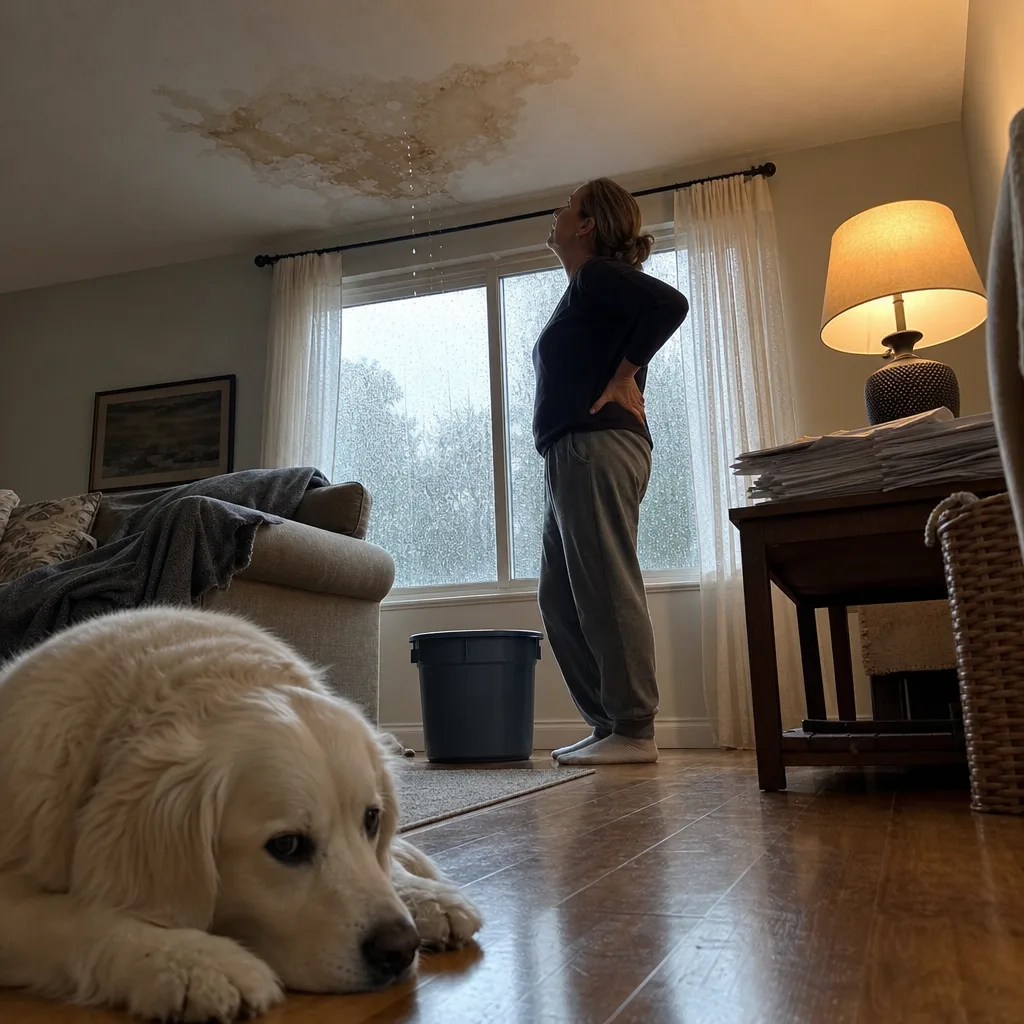
Why Storm Season Drives Roof Emergencies in Florence
Most roofs don’t fail on a calm day. They fail when a storm finds a weak spot that was already there. That’s why emergency calls in Florence pile up when the weather turns, and why a little work before the season can keep you from making one of those calls.
Florence sits well inland, so people sometimes figure the big coastal storms won’t reach us. They do. By the time a tropical system gets to the Pee Dee, it’s usually lost some of its punch. But it can still bring hours of wind and heavy rain, and sometimes days of it. Spring and summer thunderstorms add their own mix of hard gusts, sideways rain, and now and then hail.
Here’s what that weather does to a roof:
- Wind gets under shingle edges and lifts them. Once a shingle’s seal lets go, the next gust can peel it right off, and the ones around it often follow.
- Rain blows sideways, not just down. Wind-driven rain gets pushed up under flashing and laps that keep water out fine in a normal shower. A roof that’s never leaked can leak for the first time this way.
- Days of rain soak the ground. Wet soil loosens a tree’s grip, so a tall pine that’s stood for years can tip over in wind it would’ve handled in dry weather.
- Hail bruises shingles and dents metal. The damage may not leak right away, but it can shorten the life of the roof.
The other half of the story happens before the storm ever shows up. Florence summers are long, hot, and humid. Day after day of sun bakes asphalt shingles and dries out the sealant that holds them down. Heat and cooling make flashing and fasteners shift a little at a time. None of that looks like much from the driveway. Then a strong storm comes through and the weakest part of the roof gives first.
So the real question isn’t whether a storm will test your roof. It’s whether your roof is ready when it does. You can’t stop the weather, but you can cut down the odds of a real emergency:
- Get the roof looked at before the stormy months. A roof inspection can catch lifted shingles, loose flashing, and worn sealant while it’s dry and cheap to fix.
- Trim limbs that hang over the house. A branch that scrapes the shingles every windy day is wearing them down, and it’s the first thing to come down in a storm.
- Look at the trees close to the house. If a big one is leaning, dying, or has bare dead limbs up top, have a tree service check it before storm season.
- Save a local roofer’s number now. After a big storm, every roofer in town gets busy at once. Knowing who you’ll call beats searching for help with water on the floor.
None of this makes a roof storm-proof. A big enough pine will go through any roof. But a roof that’s tight going into the season is a lot less likely to turn a rough night into a hole over your bedroom.
Checking a Roofer's License Before Storm Repairs Begin
Checking a license takes about five minutes. Fixing a bad roofing job can take months and cost a lot of money. Even with water on the floor, you have time for the five minutes.
South Carolina contractors are licensed through the state’s Department of Labor, Licensing and Regulation, called LLR. LLR has a free public lookup. You can search by the contractor’s name or license number. Don’t stop when you find a match. Look at what the record says.
- Is the license active? An expired or suspended license doesn’t count.
- Does the name on the license match the name on the truck, the business card, and the contract? If a crew shows up under one name and the license belongs to someone else, ask why.
- Is the license for the kind of work they’re doing? Ask them to explain it if you’re not sure.
Then ask for proof of insurance, in writing. You want two things. The first is liability coverage, in case they damage your house. The second is workers’ comp, in case someone gets hurt on your roof. A worn shingle roof gets slick after rain, and falls happen. If the roofer isn’t covered, you don’t want to find out the hard way whose problem that is. Any real contractor can get you a certificate of insurance. If they stall or change the subject, that tells you something.
Storm weeks bring the out-of-town crews we talked about earlier. Here are a few signs worth slowing down for, no matter who’s knocking:
- They want cash only, or most of the money before any work starts.
- They push you to sign today because a “deal” ends tonight.
- They promise your insurance will cover everything before anyone has seen your policy.
- They hand you a form that lets them deal with your insurance company for you. Read anything like that slowly before you sign it.
- They have no local address and no phone number that a real person answers.
Here’s the practical way to handle it when the roof is open. A tarp tonight and a permanent repair next week are two separate decisions. If you need the water stopped right now, at least get the company’s name, license number, and a written price for the temporary work before anyone climbs up. Look the license up while they work if you have to. Save the bigger decision for when you’ve checked the license and insurance and read the paperwork. Nobody should rush you on that part. The tarp buys you that time.
Also get the full scope in writing. That means what’s being repaired, what materials are going on, and who’s doing the work. A contract that just says “storm repair” leaves too much open.
We’d rather you check us than take our word for it. Our license is SC License LLR 63047. We’re insured, and our own crews do the work.
Frequently Asked Questions
If it’s safe to do from the ground, you can cover small areas near edges, but you should not climb onto a wet or storm-damaged roof to tarp it yourself. Falls happen fast on a slick, damaged roof. Describe the damage when you call so the crew knows what size tarp and how much boarding to bring.
Most policies cover emergency measures that stop further damage, but you should confirm coverage with your insurance company before assuming. Keep photos from the ground and inside your home, dated, along with notes on when you first saw the damage. A written record of the temporary fix and the permanent repair helps support your claim.
Call a tree service to remove it before any roofing work can safely start, since a roofer can’t cover the roof while a tree or limb is still sitting on it. If you need both a tree service and emergency roof repair, call both right away so each can schedule their part.
- Licensed & Insured (SC License LLR 63047)
- 5.0 rating on Google Reviews
- Customers value the quality of the work and materials
- clear communication